Thursday, July 25, 2013

Democratizing the Public School System

%alt
Whenever popular education is mentioned, Paolo Freire is usually the first name that comes to mind.1 But students of democratic pedagogy in the United States have plenty of home grown examples of their own to study. 

John Dewey, for example, who saw the public school system as fundamentally authoritarian, reproducing a “superior class… [whose] culture tends to be sterile [and whose] actions tend to become… capricious, aimless, and explosive….”2 He wanted teachers to teach children not by force but by inducement; and growth itself had to be seen as an end.3 

Indeed, if American society was to become truly democratic, Dewey argued, the children had to be taught to “take a determining part in the making as well as obeying laws”4

In 1932, Miles Horton—taking democratic education to an activist level—founded the Highlander School in Tennessee, on the principle that people had the means to solve their own problems without relying on experts or institutions. Horton believed that a pedagogy that helped people analyze their own experiences, and that of others, would promote participatory democracy. Many organizers of the labor movement in the 1930s gained valuable skills at Highlander. In the late 1950s, Septima Clark made the Citizen Education Program at Highlander the foundation for the Southern Christian Leadership Council (SCLC) Citizenship Schools.5 In turn, the Freedom Summer Schools of Mississippi used the SCLC citizenship curriculum as a template.

The 1964 Freedom Summer Schools arose in response to the inadequacies of the existing public school system, which was segregated and authoritarian. The teachers were given a written curriculum but were also advised “to shape your own curriculum in the light of the teachers’ skills, the students’ interests, and the resources of the particular community.”6 The emphasis on developing curriculum and teaching method based on the students’ experiences arose out of a vision that “[encouraged] the asking of questions,” and a “hope that society can be improved.”7

Like the authors of the 1964 Freedom School curriculum, Don Arnstine argues that public schools have historically failed to produce active democratic citizens. Instead, their aim is only to socialize students, not educate them.

“Socialization is characterized by imitation, participation, and obedience to instruction and command. Its outcome is the acquisition of adaptive habits, skills, and attitudes. The processes of education… are far more subtle, adding to the above processes two-way communication, initiative, creativity, and criticism. The outcome of educational processes is the acquisition of attitudes and dispositions, knowledge and skills, that are individualized and critically thoughtful.”8 

%alt
Uprooting Bureaucracy
To change a system that merely socializes, into one that also educates, would require a social movement. Not only because “macroeconomic mandates continually trump urban educational policy and school reform.”9 Or that corporate-engineered high-stakes testing has eliminated community participation in the creation of educational goals and policy.10 

But because a social movement is the only way fundamental change can occur in any deeply entrenched bureaucracy. If the system can prevent a progressive school board in a progressive city from implementing systemic progressive educational reforms as advocated by Dewey or Horton, the only hope for change is outside the system.

The obstacles to introducing popular or progressive methods and goals to school districts caught up in the high-stakes testing paradigm are numerous, and range from the way school boards function as democratically elected bodies, to big business, to entrenched political interests, to the proliferation of foundational support for educational reform.

Because school boards rarely have their own line staff, board members depend upon the school superintendent’s office for most of their information and recommendations.11 (The seven San Francisco school board commissioners, for example, share one secretary.) Superintendents, in turn, are focused not so much on the schools’ potential, as how to manage the system they inherit. So, their recommendations to boards and district bureaucracies tend to focus primarily on the gargantuan task of managing 10,000 employees and 55,500 students—increasingly poor and working class—with a dwindling school budget and under increasingly complex and rigid rules imposed by the state and federal governments. Consequently, the school boards have tended to close the smaller but more effective schools for disproportionately large numbers of poor and working class students of color.
%alt

Board Culture and Structure Resist Change
It is doubtful, however, that even if the superintendents were driven by goals other than maintaining a system that essentially sorts and socializes, they would implement progressive goals and methods. Ziegler and Jennings’ research on district politics suggests “in unequivocal terms, the existence of an educational elite which is consciously self-perpetuating.”12 

School board incumbents generally select their successors, and most candidates do not campaign on issues that would distinguish them from rivals.13 Even when “delegate-minded” board candidates are elected, they are quickly socialized into a “trustee” mentality and begin to identify with entrenched interest groups. This culture is reinforced by national school board meetings, superintendent sessions, and a plethora of handbooks.14

In San Francisco, for instance, few voters are aware of educational issues, and school board elections are popularity contests won by those who can raise the most money. When grassroots candidates do get elected, they are subtly socialized to “work with the superintendent,” and use meaningless phrases, such as “laser-like reform on academic achievement.” The combination of propaganda from professional associations and being wooed by big business vendors makes even the most progressive school board candidate realize that it would be political suicide to challenge a superintendent’s “laser-like focus” on creating a lean and mean school system.

School board members who suggest progressive pedagogy and curricula are accused of being “leftist ideologues” or “not about the kids,” by business leaders, the media, and fellow professionals. If these attempts fail to inhibit board members, big business can threaten to withdraw its subsidies and political will from desperately needed supplemental district funding (parcel taxes, for example). But most board members respond to the carrot enough to believe that whenever there is a crisis—and there is always one around the corner—the “business advisory board” is the group to approach for advice and support.

Interest Groups Vie for Control
School board members are not the only ones effectively co-opted by the political system. Organized ethnic or identity groups, representing very few constituents, sometimes act as gatekeepers. Leaders of these groups punish those who make decisions based on progressive educational principles rather than skin color, gender, or sexual orientation. Many a San Francisco school board meeting has been rendered ineffective by speeches from leaders of non-representative but highly organized identity groups. The largely white and middle class Parent Teachers Association (PTA) is playing into the hands of the historically disenfranchised ethnic and racial identity groups (and undermining their own political power) when they urge the school board not to be critical of the existing two-tier public school system—for fear of increasing middle-class and white flight from the schools.

As for teacher and service employee unions, having only recently found a place within the system, they are on the defensive and often fight any attempt by school boards to shake up the system. Their focus on wages and working conditions leaves little political capital for social justice issues, and their aspirations for a middle class lifestyle makes them insensitive to potential allies in school reform, viz: parents who earn less than they do. Teachers are socialized to believe in the myth of meritocracy and in their own powerlessness to change the system, long before they begin to teach.

Big business, for its part, has become adept at playing the entrenched interest groups against each other while remaining ostensibly “above the fray.” Foundations and non-profits involved with the school district intensify this dynamic when they focus on issues, such as cleaning bathrooms and community alleyways, instead of focusing on empowering the poor and working classes to challenge inequalities in the distribution of wealth and the power relationships that reinforce that inequality.

Hierarchy Overwhelms Democracy
The school system in the United States is fundamentally hierarchical and authoritarian. Hence, its structures and functions are at cross purposes with democratic aims. According to Don Arnstine, education—as defined by Dewey, Horton, and the 1964 Mississippi Freedom Schools—can only be implemented, if:

1.    The multiple-choice and standardized testing systems and the college admissions procedures closely related to them are changed.
2.    There’s a change in the way teachers are prepared and placed in their jobs, and… “organized for effective action.”
3.    All forms of segregation (not just race) within schools are ended.
4.    Students have opportunities to learn outside school.15

Debbie Meier in her book, Will Standards Save Public Education?, offers “six alternative assumptions” that allow “schools to instruct by example in the qualities of mind that… a democracy should be fostering in kids—responsibility for one’s own ideas, tolerance for the ideas of others, and a capacity to negotiate differences…. [T]his alternative vision isn’t utopian, even if it might be messy—as democracy is always messy.”16

For democratic education to take place, ideals have to replace standards, and teachers have to understand the purposes and interests of their students. They have to teach students how to pose their own problems and solve them democratically, in groups.17 Within the current school system, this can only happen sporadically.

Possibilities for the Future
Jean Anyon argues that there are radical possibilities in “the concentration of so many poor people in relatively small urban schools… It naturally offers a potential base for organizing a new social movement.”18 Yet, the vast majority of teachers focus on high-stakes testing, believing that they have a moral obligation to prepare their students for it. Pursuing this “moral obligation” saps most of their energy, leaving very little for organizing a social movement. It remains for those outside the school system to offer teachers the hope of fundamental  change, and support for the idea that they have a moral obligation to change the system. Simultaneously, progressive school board members need to see themselves as unapologetic activists, not “team players.”

In San Francisco, we believe we have begun to do this. Eric Mar continues to cultivate a grassroots base and Kathy Emery has co-founded the San Francisco Freedom School, which uses a people’s history of the Civil Rights Movement to show educators and other activists how to build the infrastructure for the next social movement. Teachers 4 Social Justice nourishes progressive teachers and parents through study groups and provides an outstanding local and national networking opportunity during their annual conference. The San Francisco Organizing Project has begun teaching parents how to organize in schools and establish alliances with teachers, and also to connect educational reform to affordable housing, healthcare, safety, and immigrant rights. We believe that these are the building blocks for the next social movement in this country. 

Endnotes
1.    Freire, P. Pedagogy of the Oppressed. Translator, Myra Bergman Ramos (New York: Continuum, 1986).
2.    Dewey, J. Democracy and Education: An Introduction to the Philosophy of Education. (New York: The Macmillan Company, 1944), 84-85.
3.    Ibid. pp. 50.
4.    Ibid. pp. 120.
5.    Horton, M., Kohl, J. and Kohl, H. The Long Haul: An Autobiography. (New York: Teachers College Press, 1998).
6.    “Note to Teacher” from Freedom School Curriculum. 1964. Freedom Summer Collection, 1963-1964. (New York: Schomburg Center for Research in Black Culture). The New York Public Library. See: www.educationanddemocracy.org.
7.    Freedom School Curriculum: Introduction to Citizenship. Curriculum from “The Student Nonviolent Coordinating Committee Papers,” 1959-1972 (Stanford, North Carolina: Microfilming Corporation of America, 1982) Reel 67, File 340, Page 0830.  See: www.educationanddemocracy.org.
8.    Arnstine, D. Democracy and the Arts of Schooling (Albany: State University of New York Press, 1995), 10.
9.    Anyon, J. Radical Possibilities: Public Policy, Urban Education, and a New Social Movement (New York: Routledge, 2005), 2.
10.    Emery, K. The Business Roundtable and Systemic Reform (Doctoral dissertation, University of California at Davis, 2002). See: www.educationanddemocracy.org.
11.    Emery, K. and Ohanian, S. Why is Corporate America Bashing our Public Schools? (Portsmouth, New Hampshire: Heinemann, 2004).
12.    Emery, K. “Corporate Control of Public School Goals: High-Stakes Testing in its Historical Perspective.” Teacher Education Quarterly, Spring, Vol. 34. No. 2. (2007): 25-44.
13.    Fantini, M., Gittell, M., Magat, R. Community Control and the Urban School (New York: Praeger, 1970), 68.
14.    Ziegler, L. H. and Jennings, M. K. Governing American Schools (North Scituate, Massachusetts: Durbury Press, 1974), 51.
15.    Zerchykov, R. School Boards and the Communities they Represent: An Inventory of the Research, NIE Grant 80-0171, (Boston: Institute for Responsive Education, 1984).
16.    Cistone, P.J. (Ed.). Understanding School Boards. 63-76. Lutz, F. W. Local School Boards as Sociocultural Systems. (Lexington, Mass.: Lexington Books, 1975), (D. C. Heath).
17.    Arnstine, D. Democracy and the Arts of Schooling. (Albany: State University of New York Press, 1995).
18.    Meier, D. Will Standards Save Public Education? (Boston: Beacon Press, 2000), 4-5.
19.    Arnstine, D. Democracy and the Arts of Schooling (Albany: State University of New York Press, 1995).
20.    Anyon, J. Radical possibilities: Public Policy, Urban Education, and a New Social Movement. (New York: Routledge, 2005), 5.
Eric Mar is a member and past president of the school board of the San Francisco Unified School District. Kathey Emery is a co-founder of the San Francisco Freedom School and co-author of Why is Corporate America Bashing Public Schools?

Wednesday, July 17, 2013

Resisting the Normalcy of White Racism

I AM NOT TRAYVON MARTIN. 
I AM NOT TROY DAVIS.
Antiracist White Teen Speaks to Her Peers About Confronting Racism


NOTE: This was posted last year on Mar 31, 2012

My thoughts on whiteness, privilege, and activism in the wake of Trayvon's murder.

Transcript:

I AM NOT TRAYVON MARTIN.
I AM NOT TROY DAVIS.


...and to the middle class, white, socially concerned activist who wears a shirt emblazoned with those slogans, you are wrong.

I know you wear that shirt to stand in solidarity with Trayvon, Troy, and other victims of injustice. The purpose of those shirts is to humanize these victims of our society, by likening them to the middle class white activist wearing it. And once we've humanized the victims, this proves to us the arbitrariness of their deaths and thereby the injustice at play.

But the fact of the matter is that these men's deaths are anything but arbitrary. The fact that the real Troy Davis and Trayvon Martin and countless other victims of oppression are buried under 6 feet of cold dirt while we middle class white activists are alive, marching, and wearing their names is an indication that our societal system is working exactly as it's intended.

A more accurate t-shirt to display on my white body would be "I AM GEORGE ZIMMERMAN." Zimmerman and I were indoctrinated in the same American discourse where we learned that the "other," particularly black men like Trayvon and Troy, were less human and were to be feared. Society taught me that as a little white girl, I must preserve my purity and goodness, and that the presence of young single males threatened it. Society taught me that being in the presence of a BLACK man compounds that threat exponentially. I have been taught that male, black, bodies are an immediate threat to my safety and the well being of society as a whole, and Zimmerman was taught the same damn thing. We're all taught it.

I look at George Zimmerman and think, "there, but for the grace of god, go I." Had it not been for a decent education, intense critical thinking, and some truly excellent parenting, I would never have questioned the societal norms that Zimmerman and I were both taught, and I would have ended up feeling his attack on Trayvon was justified, just as he did, and the state of Florida does.

If we are to effect real change in the wake of Trayvon's murder, we have to realize this. Realizing that you more closely resemble a homicidal oppressive force than a helpless victim is a really uncomfortable thing to do. I know. But wanting to identify with the victim is weak, and immature when it is not an accurate representation of reality. Real change is effected when we own up to our actions, our privilege, and our complicity with the system that murdered Trayvon and countless others.

Us privileged activists have to realize just how easy it is to be Zimmerman, and work to change this. Subvert stereotypes. Make it harder for others to buy into the bullshit that we're fed our whole lives about race, class, gender, and other people by identifying and critiquing these messed up norms. Force adults to confront these norms, and raise children without indoctrinating them with the same old bullshit. Use your privilege to actively dismantle this messed up system. Listen to marginalized people like Trayvon's family and Troy's family and insure them access to the discourse. Listen to them, stand in solidarity with them. But do not, I repeat, DO NOT claim to be them.

Tuesday, July 16, 2013

No Need to Teach Black History & Cutlure in a "Common Core" World

OUTRAGEOUS!!
Protests Sparked in Detroit Over the Dumping of Black History Books


Zach Schonfeld
Jul 9, 2013- theatlanticwire.com
NOTE: This is one result of "Race to the Top/Common Core State Standards/Hi Stakes Testing" Policies: Furthering the Eurocentric Curriculum of Exclusion and Erasing Black History and Culture for All of children.


Published on Jul 13, 2013-- Highland Park School Leaders Destroy Valuable Books & History! 
A No Struggle, No Development Production! By Kenny Snodgrass, Activist, Photographer, 
Videographer, Author.

A Detroit area school district has erupted in protest over the discarding of a historic book collection that is said to contain more than 10,000 black history volumes, included films, videos, and other artifacts. The blame, according to residents of Highland Park, a small city surrounded on nearly all sides by Detroit, belongs to Emergency Manager Donald Weatherspoon, who claims the collection was thrown out by mistake but that the district cannot afford to preserve it. Yesterday, angry residents held a public protest, blocking traffic, wielding megaphones, and displaying picket signs with slogans like "21st Century Hitler Burning Books" and "Dump The EM, Not The Books"—referring to the state-appointed emergency manager.

Among the picketers was Deblon Jackson, a Detroit-area musician.

"The emergency manager had been in the district for over a year and then they decided to throw away all the black artifacts—books that were no longer in print or published, all kinds of tapes and catalogues," Jackson explained to The Atlantic Wire. "We want to preserve those artifacts so our children have something to look back on. We're just mad about it and we're not going to stand for it, just throwing away our history like that."

The outcry began when a small portion of the volumes in question was discovered in a dumpster three weeks ago by Paul Lee, a local historian who helped assemble the collection. According to USA Today, the collection was largely the result of civil rights-era demands to incorporate African-American studies into school curriculums—especially in communities like Highland Park, whose population is about 93% African-American. Jackson hopes to place the books in a community center, but Weatherspoon has instead expressed interest in donating those with historical value to a library or museum. (Of course, the majority of the collection has already been lost to the dumpster.)

Marcia Cotton, a member of the Highland Park Renaissance Academy Board of Directors and lifelong resident, said she attended a meeting in which Weatherspoon took responsibility and claimed the books were discarded by mistake. Her fellow board member, Vice President Andre Davis, soon resigned over the controversy. But Cotton isn't so sure the books are the most pressing issue in the community.

"I would very much like to get above the fray of the controversy and rather discuss solutions to the looming debt crisis facing the school district, the decline in school enrollment and city population, and how best we can work with our city officials and provide a greater quality of life for our residents and quality education in a safe environment for our children," Cotton said in an email. "We can't solve 21st century problems with 20th century tactics."

Jackson, meanwhile, hopes to continue protesting.

"We have a protest scheduled every day this week until we get what we want," she said. "They don't want the children to read, in my opinion. How do you have a library with no books? How do you mistakenly throw books out?"

"This is a modern-day Hitler," she added.

Watch video footage of the protest here, via WXYZ-TV Detroit:

Wednesday, July 10, 2013

Fightback Against Racist Queens HS Principal

Racism Still Prevails Among Many Bloomberg MisEducation Principals


It is a high school created for the children of immigrants; many students speak only Spanish when they arrive. The educators here, who spoke exclusively to Eyewitness News, say it requires a principal who is comfortable with racial diversity, but they say that is not the kind of principal they have now. 


At the building that includes Pan American International High School in Queens, John Flanagan says he knew he was not his principal's favorite teacher.

"She had something against me, personally," he said.

The principal is Minerva Zanca, who took over the school last year. Educators call her intimidating, but they did not expect what they say they learned about Ms. Zanca after a teacher evaluation meeting in her office, where she had harsh criticism for John Flanagan.

Assistant principal Anthony Riccardo who was also at the meeting, recalled a statement she made about Flanagan.

"When he left the room, she turned to me and said, 'Did you see his big lips quiver?"

Mr. Riccardo wrote that account in an affidavit. Flanagan says he remembers the meeting very well.

"My mouth was moving around and I tried to keep still because I was very upset at what she was saying and when I read his statement, "that's how I knew that what she had against me," said Flanagan. "What I'm now coming to realize is that she had a racial bias."

But apparently there was more, also sworn to by Mr. Riccardo, and it concerned alleged words by the principal about teacher, Heather Hightower.

"One day I was actually walking down the hallway with Ms. Zanca and we're walking and we saw Heather and she said to me, 'Doesn't she look like a gorilla in a sweater?'"

"It was because of the color of my skin and the look of my hair," said Hightower. "She had issues with (me) for whatever reason."

According to Ms. Hightower, she had also received negative feedback from Principal Zanca.
"In April, she said, 'Well, you really haven't progressed at all as a teacher, I'm very disappointed and I'm going to give you a discontinuance.'"

Discontinuance means Ms. Hightower, who was not tenured, has been fired, and so has John Flanagan. We tried to speak to Ms. Zanca at her Queens home, we phoned and e-mailed the principal, but she was not available for comment about the allegations of making racist statements.

"Why is it OK for her to turn around and think because I'm white, that she can say that?" said Riccardo. "You cannot have that feeling; even flippantly have that feeling and be the leader of a school."

Riccardo says his own career is on the line because Ms. Zanca has recommended he be fired, after he filed the affidavit against her.

The Department of Education confirms it has launched an investigation.
||||||||||||||||||||||||||||||||||||||||||||||||||

CONTACT:
Kevin Powell, kevin@kevinpowell.net, 718-399-8149
Peter Lamphere, peter.lamphere@gmail.com, 917-969-5658


WHY? Pan American International High School will be without any African American teachers next year, because two teachers have been fired after a Queens Principal, Minerva Zanca, made racist comments about them in closed-door meetings with her assistant principal. The third African American teacher is leaving the school because of severe budget cuts (which were racially motivated) to her hugely successful Theater program.

We demand that there is a full investigation into these allegations and, if they are substantiated, that the DOE hold the principal accountable to its zero-tolerance policy against discrimination. We also demand that the discontinuances of the personnel involved (Teachers John Flanagan and Heather Hightower and AP Anthony Riccardo) be reversed.

Local Councilmember Julissa Ferreras says "The allegations brought against Ms. Zanca are very serious and concern me deeply. As a representative of an extremely diverse district, I cannot and will not stand for this type of behavior."

Kevin Powell, president of BK Nation, adds "It is not only important to have high standards for our public school teachers but we must also support the good ones, like these teachers, who are completely dedicated to their young people. I find it unacceptable that a principal can engage in this kind of conduct without any repercussions. We are not going to stop until due justice and process is served here."

Monday, June 10, 2013

Black community celebrates the legacy of educator and activist Jitu Weusi
By NAYABA ARINDE Amsterdam News Editor
Thursday, June 6, 2013

How did the Black grassroots Nationalist Movement come out to honor Jitu Weusi? With abundance.

At a series of events for what activist and professor Sam Anderson called "one of our 1960s Renaissance Men," friends and supporters came from all over the tristate and as far as Philly.

"Educator, activist, Brother, Baba, friend, comrade and giant—made his transition into Eternal Life, joining his ancestors," said the family, adding, "Come out to honor, celebrate, and remember him!"

Weusi, formerly known as Leslie R. Campbell, was known to be a lover of three big things: his community (Diaspora), community control of focused education and, of course, jazz. The educator, activist, community leader, jazz lover, husband and father has gone, leaving a huge hole that only his tremendous frame could fill. Luckily, between all his work, the creation of the cultural phenomenon the East, and Uhuru Sasa, Weusi has left many disciples up and through Brooklyn and beyond.

First, there was the "sitting" at Weusi's beautiful For My Sweet jazz and cultural spot in Bed-Stuy, then this past weekend, the celebration continued. On Saturday, June 1, hundreds of friends, supporters and admirers joined the family at the historic Boys and Girls High School to honor the man also known as the "Gentle Giant."

Jitu's Brother, Job Marshariki Speaks of his Brother's Life of Activism.

On Monday, June 3, there was a formal viewing at Brown Memorial Church, which turned into a grand reunion of good, old friends. The funeral at the same church was another grand tribute to the man. Folks spotted each other across pews and made sophisticated dashes to give affectionate embraces. African garb (native dress) was largely the order of the day. It was all very beautiful.

As he did at the Weusi tribute at Boys and Girls High School, the Rev. Herbert Daughtry spoke passionately about the man. Among the other attendees were Councilman Charles and Assemblywoman Inez Barron, Councilwoman Leticia James, state Sen. Bill Perkins, Comptroller John Liu, Randy Weston, Pharoah Sanders—who performed beautifully at both the church and the festival—and actor-activist Ralph Carter, who got the whole church engaged in a song about continuing the fight.

Many messages were sent and read by Adeyemi Bandele of Men on the Move. Nation of Islam leader Minister Louis Farrakhan sent a message through Minister Abdul Hafeez Muhammad, head of Mosque No. 7 in Harlem.

After the intermission, the family returned to continue with a "Celebration … East Style" at the renowned Claver Place. Despite a downpour, people stood in the rain for an African Jazz Street Festival, followed by the return of the "Jazzy Monday" jazz series.

With his towering 6-foot-7 frame, Weusi would glide into a room and command it. His quiet disposition could transform him into a sage of a man who would debate the subtle nuances of anything political, educational or cultural—but don't get him started on jazz. His Central Brooklyn Jazz Consortium was the soundtrack to this political warrior's life.

The "giant of a man" was born and raised in Brooklyn. Weusi left a tremendous legacy as an outstanding career educator, starting at the New York City Department of Education (DOE) in September of 1962, then co-founding the African-American Teachers Association.
Jazz Legend, Pharoah Sanders, performs at Jitu's Funeral.
He was a key figure in the historic Oceanhill-Brownsville conflict, which pushed for community control of inner-city schools, which ultimately led to changes nationwide. In the late 1960s, Weusi left the DOE and opened the first Black independent private school for urban youth. The Uhuru Sasa Shule (Freedom Now School) was one of the founding member schools of the Council of Independent Black Institutions, an international umbrella organization for independent schools. His impact on education was only matched by his political activism. He was a key component in creating the New York Chapter of the National Black United Front and African-Americans United for Political Power.

Weusi's political involvement was a vital force in the election of Mayor David Dinkins and the Rev. Al Sharpton's push to become the first Black U.S. senator from New York. Sharpton was on the program for the church service but did not attend.

In 1970, Weusi was the main conduit for the creation of the East Cultural and Educational Center. Several members of the East attended the celebrations and service for Weusi. Loyal, proud and recommitted, it was like a family reunion.

And then there was his jazz devotion. He was in love with the genre—African-Americans' gift to the world. As the chairperson of the Central Brooklyn Jazz Consortium for years, he kept Brooklyn in the jazz loop.

It was at the East where Weusi presented jazz greats like Max Roach, Betty Carter, Randy Weston, Pharoah Sanders, McCoy Tyner, Hugh Masekela and Sun Ra.

Initially, Angela Hope-Weusi (center) stated, "With a broken heart, I am announcing that my husband made his transition last Wednesday, May 22, 2013. Our family has been soothed by the hundreds of notes, cards and kind words from the people who loved Jitu the same way we do. We came together last Saturday at For My Sweet as family and community to hug and hold each other. We shared Jitu stories, listened to his favorite music and rejoiced in his becoming a treasured ancestor."

The tributes have come in thick and fast. Amongst the most poignant was that from Robert Cornegy, City Council candidate for the 36th District. He said, "The best way I can describe [the homegoing for Baba Jitu) is, a young woman visiting the neighborhood asked me if this was a wedding celebration. It was at that moment that I realized how I wanted to affect those I came into contact with. Baba Jitu's effect on the lives of those in attendance was such that there was absolutely no room for sorrow for his death, but more of a celebration of his life."

Warrior Black Nationalist couple Herman and Iyaluua Ferguson told the AmNews, "Our comrade, our brother, our friend, a true warrior who led so many fights for our liberation from this pestilence called America, has left us to join the realm of the ancestors. We speak of Brother Les Campbell, whom we knew as Jitu Weusi for so many years.

"Education was his main field of struggle. His battles were marked by victories like the Oceanhill-Brownsville fight for school and community control, the founding of the school system that started as the East and became the launching pad for so many of our students, teachers and parents too numerous to recall."

Rev. Herbert Daughtry calls forth Brother Jitu's Revolutionary Spirit.
"Back in the late 1980s, when Ed Koch was asking 'How am I doing?'—ask any Black person and the answer would have to be how oppressive he was. Jitu, along with a few other brothers from Brooklyn, were searching for a political mechanism to uproot the New York City corrupt, oppressive political establishment," said activist Beverly Alston. "None of our noted leaders would take a stance against Koch so Jitu encouraged 'Al,' as he was known then, to enter electoral politics.

"As a matter of fact, I can't remember anyone calling Rev. Sharpton 'Rev' prior to Jitu. Jitu introduced Rev to Dr. Ramona Whaley and myself of Harlem, and the rest is history. May God bless the Gentle Giant!"

Minister of Culture for the New Black Panther Party Zayid Muhammad noted, "Malcolm taught us that community control was the first step towards nationhood. Jitu Weusi sought to take that first critical terrain that is the control of our own schools. He was demonized by our enemies; he was lionized by our people for his pioneering stance and efforts."

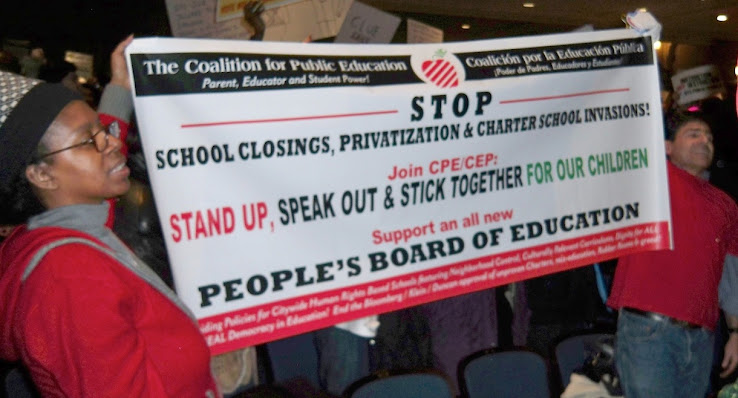
Education activist Sam E. Anderson, of the Coalition for Public Education, announced the group's Praise and Remembrance Page, for folk "to not only gather more insight into Jitu's long and dedicated life to freedom and democratic, neighborhood-controlled education, but you can also contribute your condolences and remembrances by using the comments section at the very bottom of the post. Go to http://forpubliced.blogspot.com."

Anderson told the AmNews, "Brother Jitu's Fighting Spirit for Black Liberation lives on through his blood family as well as those hundreds of us in his extended cultural and education family."

The Rev. W. Taharka Robinson, founder of the Brooklyn Anti-Violence Coalition, offered, "Jitu Weusi was empowerment at its best—education, activism, business, politics and music. He was a dynamic visionary who continued to push for perfection in our community. Jitu Weusi gave me my first job at the Uhuru Food Co-Op. Being in his employ, I learned the core values of being an entrepreneur and what one must do to succeed in life. Our griot's passing has left a great void in our community. May his legacy live on."
NY Citycouncilman Charles Barron Pays tribute to Political Organizer, Cultural Worker, Master Educator Jitu Weusi.
"Jazzy Mondays stopped when Jitu got sick. This Monday and every Monday hereafter will be Jazzy Monday at For My Sweet," said Hope-Weusi. "Mark your calendars and let's keep Jazzy Monday alive."

Meanwhile, Weusi's nephew Jelani Marshariki, son of Job and candidate for the City Council in the 35th District, told the audience at the close of the African Street Festival of the establishment of the Jitu Weusi Scholarship Fund. Donations should be addressed to Jitu Weusi Scholarship Fund, C/O Long Life Info and Referral, 1958 Fulton St., Brooklyn, NY 11233. For more information, email aweusi@gmail.com.

The Fergusons concluded, "Brother Jitu gave us so much and asked for so little in return. We are honored and humbled to pay our respects to this giant of a man, who was both a physical embodiment of that term [man] as well as a spiritual expression of that accolade. All our love and regards to you, Jitu, for your contributions to our cause, and our prayers and condolences go out to your loving family, who mourn with us your untimely passing.

"P.S. Jitu, say hello to Sonny [Abubadika] for us and tell him we will free the land."

Thursday, May 23, 2013

JITU WEUSI- EDUCATION WARRIOR/BLACK CULTURAL ADVOCATE JOINS THE ANCESTORS


 Jitu Weusi

Our greatest THANK YOU to Brother Jitu Weusi is to continue battle on in the Struggle for Democracy and Neighborhood Control for our public schools that he had dedicated more than 50 years of his life to see come to victory.

Brother Jitu, you will be missed on the frontlines. But, your relentless and principled Fighting Spirit is within us who continue to try and uphold your Education Warrior Legacy!

Jitu Weusi-- Presente!

Sam Anderson


 ------------------

A Praise Poem for Brother Jitu From Sister Jaribu Hill

Brother Jitu was our Master Teacher. I am so saddened by his passing, but am comforted by the many lives he touched and the many lessons we all learned from him. As a cultural artist, I recall performing with Ngoma at the African Street Festival and at the East Cultural Center in Brooklyn.

Wow, what a serious solar sun shout heard all around when Big Black crossed over!!! I wrote this for him and to inspire us to walk in his light and make him proud!!!


Big Black! Big Black!!! We miss you already!!!

For Jitu Weusi
by Jaribu Hill

It’s after the end of the world. Don’t you know that yet?*
Over at Claver Place on the East side facing the Sun
We jammed to sounds swelling all up and down the block!
Sunday rhythms, sweet smells harambee feasts
Colors of indigo, batiks, mud cloth wraps
A convergence of “new Africans”
reclaiming space and destiny
You walked the halls
And with each stride gave us back
Pieces of our soul-selves
We hear you now--Your voice laughing, teaching
Loving Black shades—eyes facing the East
Surrounded by children
Surrounded by the Creator’s love
Now, you stand—made your way home
Now you stand—tall in the spirit world
No regrets
Big Black, Big Black
No regrets
You were ready when the roll was called
You were ready to face the East and meet the
Sun’s rays, warming you, taking away the pain
Hold our place as we recall the lessons and
Carry on. Rest in Peace Brother Jitu
No regrets

Remember when: **The lines: “It’s after the end of the world. Don’t you know that yet?” were sung by Sun Ra in concert at the East Cultural Center on Claver Street in Brooklyn. Jitu Weusi (Big Black) was the visionary that Transformed that corner into an oasis—mecca of Afro-Sounds, stomps and chants!

 Jaribu Hill is an activist singer-lawyer now living, organizing and fighting  in Mississippi.
---------------------------------
 
A Bit About Brother Jitu
 by Olufunmilayo Gittens

Brother Jitu, in center, at NYC City Hall in August 2009 AntiMayoral Control Rally.

Activist and educator Jitu Weusi has worked to uplift and develop the cultural and social awareness of the African American community of Central Brooklyn...

Students at Junior High School 258 in Bedford-Stuyvesant know this tall, bearded, gray-haired man as their Assistant Principal, but Jitu Weusi’s impact on Bedford-Stuyvesant extends beyond the classroom. Weusi has worked in the forefront of progressive educational programs in Brooklyn and beyond, serving as one of the founding members of the former cultural and educational center, The East, and as co-founder of The East’s Uhuru Sasa school, one of the first Black independent schools with a Pan-African philosophy. In the 1960’s, Weusi worked tirelessly as a vocal participant in the struggle for community control of public schools; he later served as part of the National Black United Front, and in the political campaigns of Rev. Jesse Jackson and former New York City Mayor David Dinkins.

In addition to his educational and political service, Weusi has made a profound cultural impact on Brooklyn as a co-founder of the International African Arts Festival and more recently as co-founder of the Central Brooklyn Jazz Festival. Interestingly, Weusi avoids allowing his extensive service and notoriety to draw attention to himself as an individual. Instead, he frames his contributions as part of a larger, collective movement of people, always looking at the broader picture of his “pride and joy” Bedford-Stuyvesant, and at the progress of people of African descent worldwide.

Bed-Stuy youngster

Born Leslie Robert Campbell, Jitu Weusi grew up as a typical youngster in Bedford Stuyvesant in the late 1940’s. His family attended Siloam Presbyterian Church on Jefferson Avenue. They were poor but worked very hard, and his mother was the main parental figure in the home.

“Scoping”

When Weusi was 12 years old, his parents sent him to work at the newsstand of his cousin Charles Morris. It was that summer, and the two summers following it, that would have a profound impact on Weusi’s life. Though the newsstand was located in his community, it represented a whole new world to a young Weusi.
As a child, Weusi loved to read, and so the newsstand turned out to be the perfect place for him to work. Magazines like Popular Mechanics, Popular Science, and even the nudist magazine Sun Bathing constantly fed the curiosity of the young adolescent, who was now being exposed to a whole new world of images and ideas.

Frequenting the newsstand was a circle of young bachelors in their twenties that included Jimmy Gittens, Weusi’s cousin Leroy “Lefty” Morris, Willie Jones, Scoby Stroman, and Freddy Brathwaite. This circle of friends were socially-conscious, sports-minded young World War II veterans who debated issues and have intense discussions around culture, politics, sports (particularly basketball) and life’s other matters.

When a young Weusi read something new or had a question, he would ask one of these men. “They were [honest] with me. They told me the truth and let me make up my mind about things.” Gittens, described by Weusi as a “tall, dark-skinned man with gleaming black skin and a most infectious smile,” had an intellectual outlook that Weusi admired. He would ask Weusi to contemplate questions that were five to ten years beyond the youngster’s chronological age. A term used at the time was “scoping”; it referred to an older person taking an interest in a young person and acting as a mentor, or guide, to them.

The young men at Charles Morris’ newsstand “really shaped me during this period”, he says. “The deep respect I have for the arts, the love for cultural things, these all came from the scoping I got from them at that time.”

High school years

The high school years were difficult for Weusi. Because of his academic skills, he was accepted into the prestigious Brooklyn Tech High School. In 1952, Brooklyn Tech was still all-male, all-white, and run “like a military boot camp,” according to Weusi. Out of a population of 6,000, only 19 students were Black, and Weusi would often go for days without seeing another Black face at school. The racial isolation he felt was compounded by financial isolation - there were frequent requirements to purchase new supplies and give money to different school causes.

These made constant drains on Weusi, whose family had difficulty meeting the financial demands.

After two and a half years at Brooklyn Tech, Weusi was unhappy enough to drop out of high school altogether. Fortunately, however, he was able to convince his mother to allow him to attend Franklin K. Lane High School, where he could be around people from his community. (There were a number of Bedford-Stuyvesant students at Lane, located in the predominately white section of Cypress Hills, due to a racial desegregation order in the 1930’s.) A sad fact of American life is that for Europeans, the process of becoming American includes taking on the idea of the African as the despised racial “other”.
A young Jitu Weusi
The white students at Franklin K. Lane were mostly recent European immigrants who were in this very position. The hostility they expressed towards Blacks was overt, and white students at Lane made their disdain even more apparent in the annual spring race riots. Fortunately, a larger (and co-ed) Black population at Lane helped to buffer Weusi socially, and he graduated on the honor roll with a Varsity letter in basketball.

Passion to Learn

Weusi’s experience at Brooklyn Tech would repeat itself when he attended Long Island University. Out of a population of 5,000 fulltime day students, only 17 were African American. This time, however, the Black students formed a cohesive unit that helped Weusi and other new students navigate the storm. Sitting together in the school cafeteria, the Black students at LIU offered one another advice on the best classes to take and which professors would give a fair grade to Black students. One such professor proved more than fair. Albert Fein, a white American who had been active in the Civil Rights movement in the south, invoked in Weusi a deep passion for learning, studying, and analyzing history. Inspired by Fein’s character – a beautiful person, Weusi recalls – and by a newly cultivated desire to truly look at history, Weusi would major in the subject, obtaining his BA in history with a minor in education.

“What shall I tell my students…?”

The year was 1962. Armed with a BA in history, and the now-important minor in education, a twenty-two year old Weusi returned to Bedford-Stuyvesant to work as a social studies teacher at Junior High School 35. “What shall I tell my students who are black?” thought Weusi. The famous question, posed by artist/essayist/poet Margaret Burroughs, would be difficult to answer. In a school system that had only a handful of African American teachers and which promoted the idea of history as being the exclusive domain of Europeans, Weusi found himself restricted from giving his Black students what they deserved: an understanding of their heritage and a sense of their place in history and in the world.

Weusi was not alone in his concerns. Other teachers at JHS 35 included Al Vann, Oliver Patterson, Leroy Lewis, Randy Tobias, Joan Eastman, and Ola Cherry. These were young, Black teachers who were new to the public school system and who were speaking out about the need for changes in the New York City pubic school system. They joined with Black teachers in other schools to form the African American Teachers Association.

Great School Wars

While the teachers were expressing their concerns, the Reverend Milton Galamison – a dynamic, socially-conscious young pastor at Weusi’s home church Siloam - was continuing a tradition at the church of combining religious life with social awareness and activism. Weusi recalls that as early as the 1950’s, Galamison had spoken of such important global matters as South African apartheid and recognition of Communist China. Now, Galamison was mobilizing Bedford-Stuyvesant families around the need for school desegregation and equal education for all students.

The needs of community, the concerns of the parents, and the education of African American children were at stake. It wasn’t long before the African American Teachers Association would team up with Rev. Galamison and the families in what would later be known as the Great School Wars era. During this period, from 1958 to 1969, Weusi and other community members participated in boycotts and walkouts in protest of the New York City Board of Education’s policies.

Struggle and Victory

John Lindsay was elected Mayor of New York City in 1965. Like that of the highly popular Depression-era Mayor Fiorello La Guardia, Lindsay’s administration would come to represent a progressive, reform-oriented Republican mayorship in the overwhelmingly Democratic city of New York. It would help to usher in an era of progress for New York City, and for Blacks in particular. But this progress would not come without the unified struggle of the Black community itself.

As the in-school component of Galamison’s street advocacy movement, the African American Teachers Association had their first great struggle, centered at Intermediate School 201. In what Weusi described as a “testing” of the Black community’s strength in effecting change in Board of Education policies, the pressure that the community put on the Board of Education led to the addition of the fifth Black school principal in the City. This was a major victory at a time when there were only a handful of Black educators in the New York City public school system. For Weusi, the victory meant that “if unified and strong, you can win.” It also marked a change in the attitude of local communities: they were “no longer fearful” in pushing for change in the Board of Education’s policies and hiring practices.

Over the next two years, there was a series of similar maneuvers, many of which were effective. Yet it was not until 1968 that the struggle would go to the next level. It was in ’68 that the African American Teachers Association joined with the Ocean Hill-Brownsville Alliance around the concept of community control. With teachers and the community members standing side by side (and Galamison now part of the Board of Education) the Ocean Hill-Brownsville struggle took place. From 1968 to 1969, in what Weusi describes as the “most underrepresented yet most impactful era of Brooklyn history”, the teachers and the community battled the Board of Education and the predominately-white United Federation of Teachers in a struggle that they hoped would finally create a structure for the empowerment of local communities. The result was the establishment of the Ocean Hill-Brownsville Governing Board, a community school board that served central Brooklyn’s Black community.

A New York State Legislature bill was passed in January 1969, creating 32 school boards with the right to hire and fire key personnel. For the first time, schools boards had the right to include people of color in the local schools. Families would now have a say in their children’s education. People from the community would finally be heard – and not dismissed - by school administrations. At the time, these were the promises held by community schools boards. Despite the difficulty of the struggle, and despite differences with the Board during his time as a young teacher (at one point Weusi was penalized for taking his students to a memorial for slain leader Malcolm X), Jitu Weusi would look back at the community’s educational victories in the 1960’s as his “shining moment” as a resident of Bedford-Stuyvesant.

Activity Explosion

“Something cried out in you,” says Weusi of what he describes as the “explosion of Black activity” that hit the world between 1968 and 1969. Locally, Black Panthers in Bedford-Stuyvesant, Harlem and other Black communities were serving breakfast to school children and advancing their political cause. Nationally, African Americans were shifting their focus from civil rights to Black Power and racial consciousness. Internationally, anti-apartheid and anti-colonial independence movements were taking place throughout Africa, the Caribbean and Latin America. “Everyday something was going on,” says Weusi. “It was awesome, inspiring, motivational.” It was in this climate that Weusi become the adult advisor to an organization of progressive Black youth called the African American Students Association. In 1969, the ASA and its supporters founded and staffed The East, a cultural and educational center in Bedford-Stuyvesant/Fort Greene that would have a profound and lasting impact on the educational and cultural life of Brooklyn’s Black community.

Look to The East

It is difficult to provide a simple descriptive summary of the work of The East and the extent to which its legacy lives on in Brooklyn’s cultural life. Scholarly works, newspaper and magazine articles have been written on the cultural institution, and it could easily provide rich subject matter for at least one or two full-scale documentaries.

In many ways, The East was born out of the Ocean Hill-Brownsville struggle. The level to which community members organized to express their desire to have a real say in their children’s education led some to believe this goal could only be truly achieved by forming an educational/cultural institution that was entirely independent and community-run. Weusi himself left the public school system to co-found The East, a service-oriented independent Black cultural institution with a Pan-African philosophy. His long-held desire to teach African American youngsters about their history finally came to fruition in the Uhuru Sasa Shule (Swahili for “Freedom Now School”), the educational component of The East, described by Weusi as the organization’s “crown jewel”.

It is important to note that while serving the community, The East would not have been possible without the support of the community. Brooklyn clergy, including Galamison, provided space and fundraising skills. Eight volunteer teachers taught the high school-aged students subjects ranging from the traditional (math, science, literature) to the alternative (creative writing, Black history, physical self-defense). The families whose children attended Uhuru Sasa Shule actually helped to run the school and The East’s other components. Clothes and food drives enabled The East to send caravans of assistance to local and national causes. Fundraisers, musical events, lectures, poetry readings, art exhibitions and workshops, drama and dance performances breathed life into The East’s Black Nationalist philosophy.

Events held at The East were no small matters. The East was widely known for drawing crowds of thousands to hear lectures by H. Rap Brown, Kwame Ture (Stokely Carmichael) and Sundiata Acoli, among others. Weekly music performances included local artists like Scoby Stroman (known to Weusi since the days of Charles Morris’ newsstand) and Donna Cumberbatch, as well as internationally-recognized jazz greats including Max Roach, Randy Weston and Betty Carter.

The East continued from 1969 to 1985, but its legacy will last indefinitely in the lives of those in Brooklyn and beyond. North America’s largest African street fair, the International African Arts Festival held annually at Boys and Girls High School, began as an African-themed community block party held by The East. Churches, mosques, schools, day camps, social programs, and a variety of collectives have successfully incorporated the model of collective work and economics exemplified by The East. Cultural calendars; greater awareness and celebration of Black Solidarity Day, Kwanzaa and Black history month; widespread acceptance of African hairstyles and clothing, are all attributable to individual, national, and local initiatives of which The East was a major innovator. Overall, the community’s social consciousness was raised exponentially by The East and similar institutions.

Cut Backs and Set Backs

The mid-1970’s marked an ideological backlash in America that came with it an era of funding cutbacks of arts and cultural programs across the country. According to Weusi, a shift in values occurred in which African Americans began to favor individual, rather than collective, growth. The decline of the economy, inflation, and Bedford-Stuyvesant’s own loss of billions of dollars in federal and state aid between the mid-1970’s and mid-1980’s were all factors that led to the unfortunate demise of The East in 1985.

With the closing of The East, Weusi returned to teach for the Board of Education in 1986. His return was not exactly a happy one, as it occurred amidst the “worst mud-slinging and defamation of character” the city had ever known, acted out in public life and in the news media. For Weusi, accusations in the press against school boards, community leaders, civic leaders and community people were “calculated.” They were part of the nation-wide backlash against progressive movements and community empowerment, and school boards – the formalization of community power and input – were a prime target.

Weusi left the public school system again in 1988, but he returned again in 1991 and has continued to work for the Board of Education to the present day. He has served as a Math Cluster Head for District 17; Staff Developer for District 23, and currently as Assistant Principal in District 13.

Anchor in the storm

By 2002, Jitu Weusi will have served as an educator in Central Brooklyn for 40 years. In an era of social and educational decline, many are looking for someone or something to blame for the failure of many of the city’s public schools. At the policy level, there is widespread discussion of federally-imposed “standards”; privatization of public schools; increasing corporate involvement, and a shifting of power back to top echelons and away from local communities.

It is in times like these when progressive Black educators like Weusi serve as anchors for our troubled schools, providing a continuum, a sense of history, and a view of the larger picture of the ongoing struggle for the education and futures of African American children. One of the most positive aspects of his work, says Weusi, is the fact that he often works with students whose very parents, and even grandparents, he has taught. Weusi shares a special bond with these families, one that can only come with working with people over the years, watching them grow and have children of their own, and knowing that you have played as important part in their development as they have in yours. This is just how Weusi sees his community as a whole. An educator of thousands of students, a social activist and cultural leader, and now co-founder of the Central Brooklyn Jazz Festival, Jitu Weusi has worked to uplift and develop the cultural and social awareness of the African American community of Central Brooklyn just as much as the community has shaped him over the years. It is a relationship for which he is very grateful.

Related keywords:
“The East Legacy” by Jitu Weusi, at Kitabu: An online Webzine
National Black United Front
International African Arts Festival

Note: Written